Talented Mr Liberman

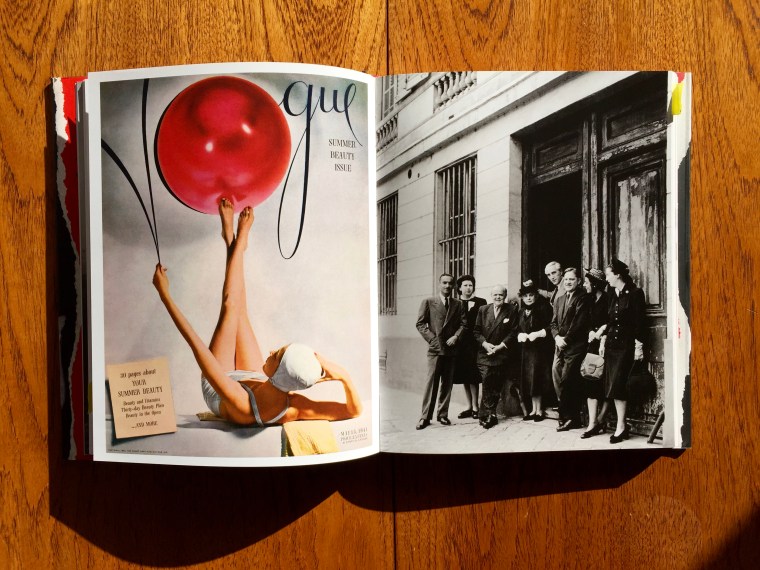
Talented, tireless and elegant. Mr Liberman certainly matches these 3 words, and his qualities permeate this extraordinary album. Often called the Art Director of the 20th century, Liberman was also prolific in painting and sculpture. It was his creative talent that produced the famous cover of Vogue in 1941 using a photograph by Horst P. Horst, turning the red beach ball held aloft by a model into the ‘O’ of the magazine’s logo. He was also responsible for turning the face of her generation Twiggy into a piece of Pop art, in floral fur and make up, on the July cover in 1967, shot by Richard Avedon. This Russian émigrée educated in Europe, became a truly dominant tastemaker with such a modern taste for that time. Mr Liberman had an eye not only for extraordinary images but also for people – Marlene Dietrich and Coco Chanel were good friends of his. He saw the enormous potential in  Diana’s Vreeland editorship, and convinced her to leave Harper’s Bazaar in favour of Vogue (where she continued as editor-in-chief between 1962-1971); and also spotted Anna Wintour – an extraordinary talent with an understanding of the “new reality” in fashion and a keen sense of the rise in celebrity culture, keeping pages of this American title irresistible since 1988.
Processed with VSCO with a6 preset
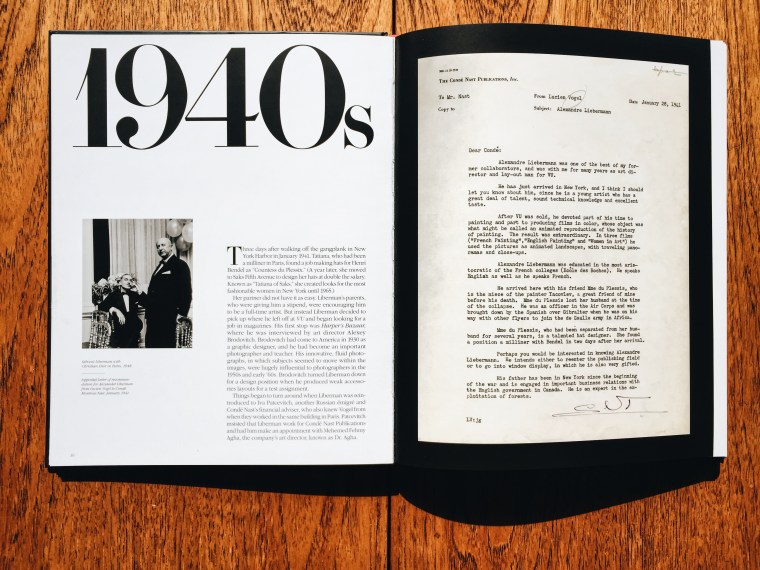
Left page: Alexander Liberman and his friend Christian Dior. Right page: Thanks to fierce support of Monsieur Vogel, Liberman had an enormous opportunity meeting and as a result, working with Mr Condé Nast himself.
IMG_1048
Left page: Iconic cover designed by Lieberman  in 1941, photographed by Horst P Horst.     Right page: Family portrait. Liberman with french editors in front of Vogue office in Paris.

It’s remarkable how Liberman controlled editorial aspect of each Condé Nast publication during challenging and uncertain periods of the 20th Century and still managed to express his artistic vision.  Whereas now, a few decades later and with digital taking over print, his creative processes seems to belong to a bygone age; however I think we can all still learn a lot from his legacy.

IMG_2418
Art&Craft. Tina Brown, former editor of Vanity Fair highlighted once, “Liberman’s ability to run high and low is an amazing gift…able to do the ‘Self‘ in the morning and a sculpture in the afternoon.”

IMG_2419

“The very bizarre thing is that Alex was not interested in fashion. At All!
He was interested in the image, which is a different thing. He knew the dress in the space, like an object d’art seen in a certain context, but not the fashion.” Beatrice Monti.

IMG_2417
Propaganda meets Pop Art. Promotional cover of Vanity Fair featuring Baryshnikov in 1983, designed to resemble an early avant-garde Russian poster.

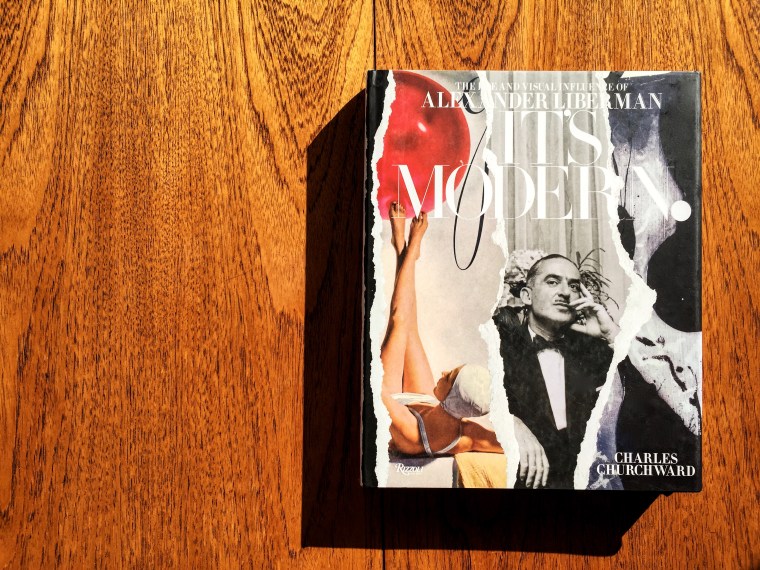
“Alex Liberman connected many worlds: Old and New, art and commerce, Europe and postwar America, high society, and the general public. He was driven to create and communicate, which he did tirelessly, and his work was always evolving, proving that (what’s) modern, never stops – pointed Charles Churchward, former designer, art director and design director at Condé Nast and author of this album. Published by Rizzoli.
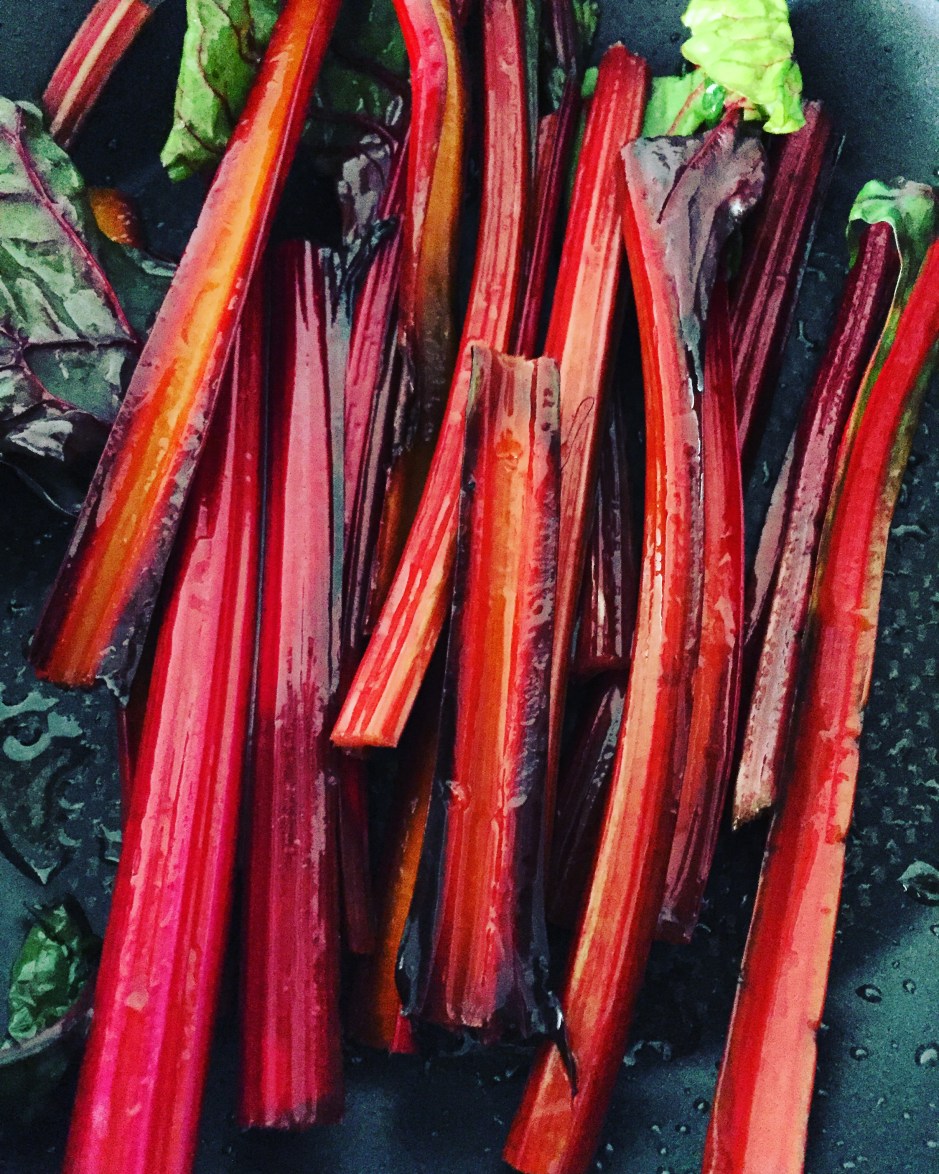
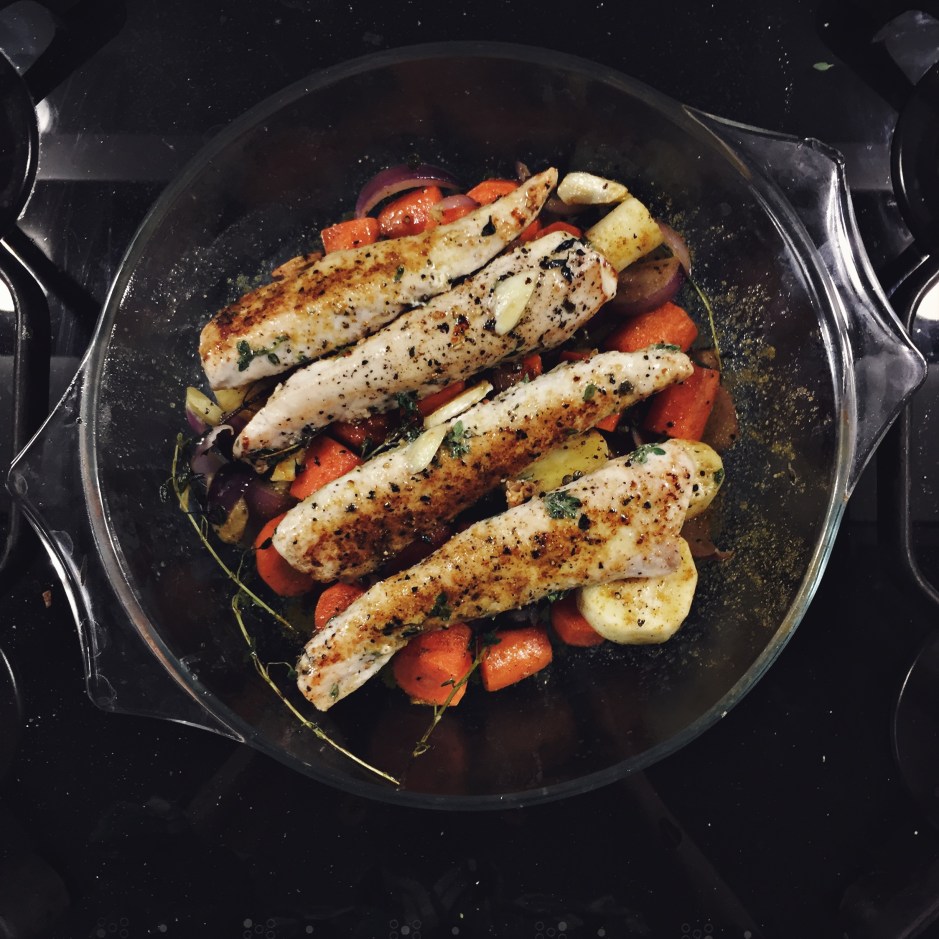
Easter. Rabbit. Casserole.
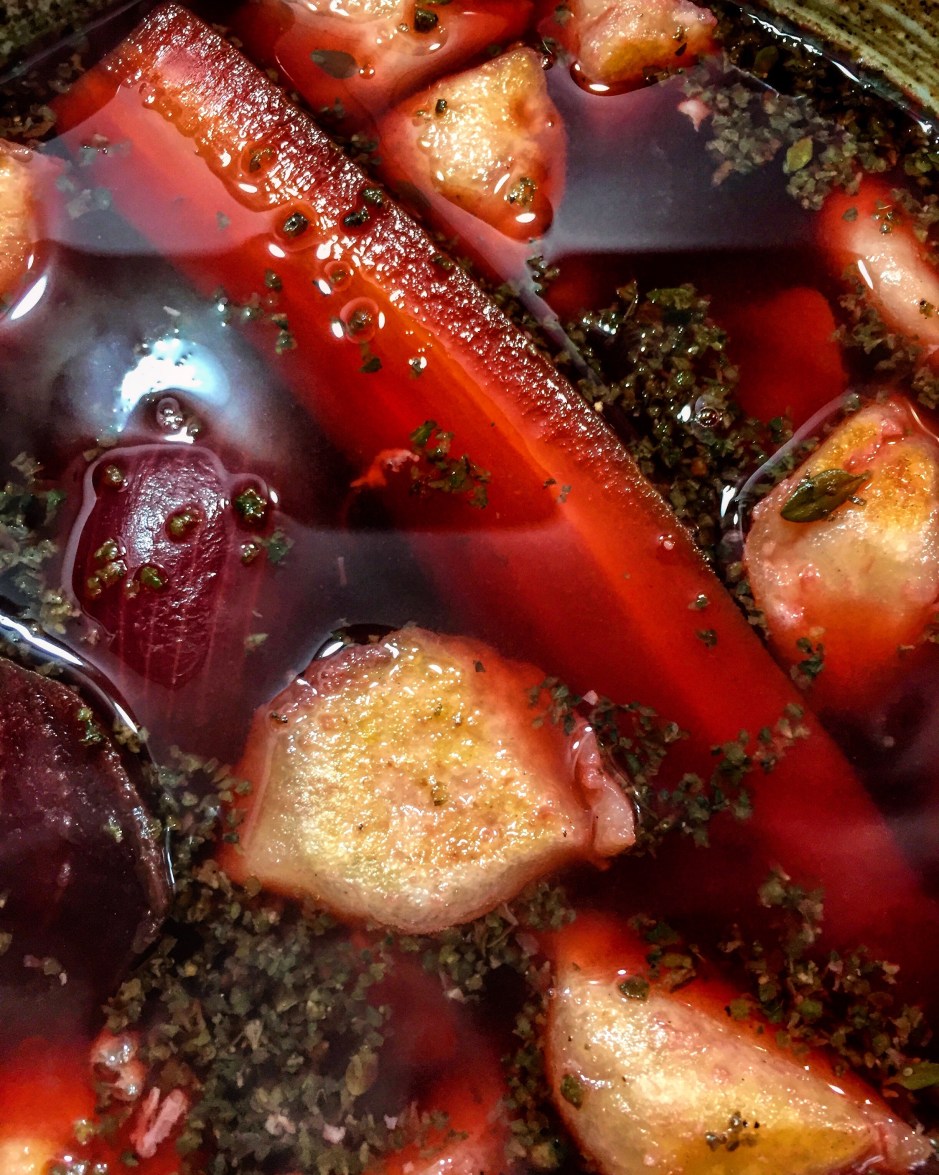
Whilst  clearing out the freezer I found a portion of rabbit given to me by a friend from countryside; which inspired me to create a seasonal dish for the Easter weekend!
Although I am a huge fan of traditional meals enjoyed with family during this period, I think that preparing something slightly different is always a bonus. Rabbit has been popular with  my family since I can remember. My granddad had his own farm with muscovy ducks, guinea fowls, and rabbits. There was nothing better than a kitchen full of steam emanating from cast iron dishes mixed with the aromas of fresh herbs and braising rabbit. So my goal was to recover from memory a particular favourite dish prepared by the lady who looked after the kitchen at my grandparents household. However, as usual, thats only the starting point, and the end result is something quite personal.

I have roasted the ingredients gradually and then braised all together in a heat resistant dish, to keep the meat and veg soft and tender.
A perfect solution for a family Easter lunch!

IMG_0425

And this is how it goes:
4-5 of rabbit fillets ( you can also use chicken if you like)
2-3 medium carrots
1 medium parsnip
2 medium red onions
3-4 garlic cloves
fresh herbs (thyme and oregano are best)
handful of dried tomatoes ( I used the sun-dried variety preserved in sunflower oil)
a bag of kale
a few tsp of a good quality fig chutney
a handful of onions marinated in balsamic vinegar

IMG_0430IMG_0424

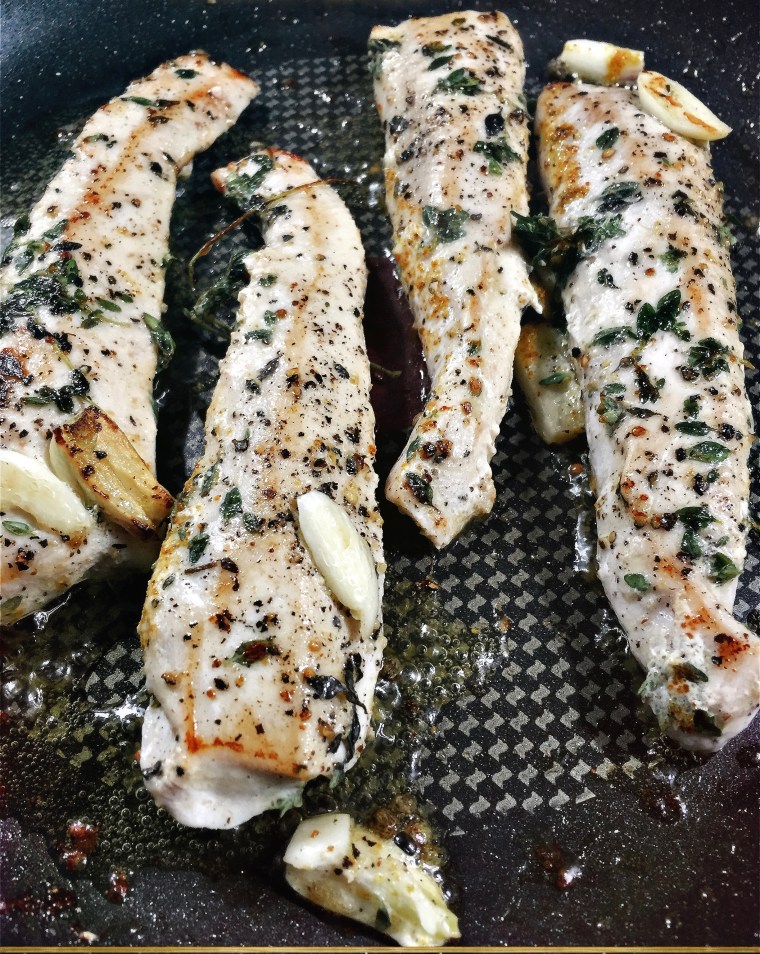
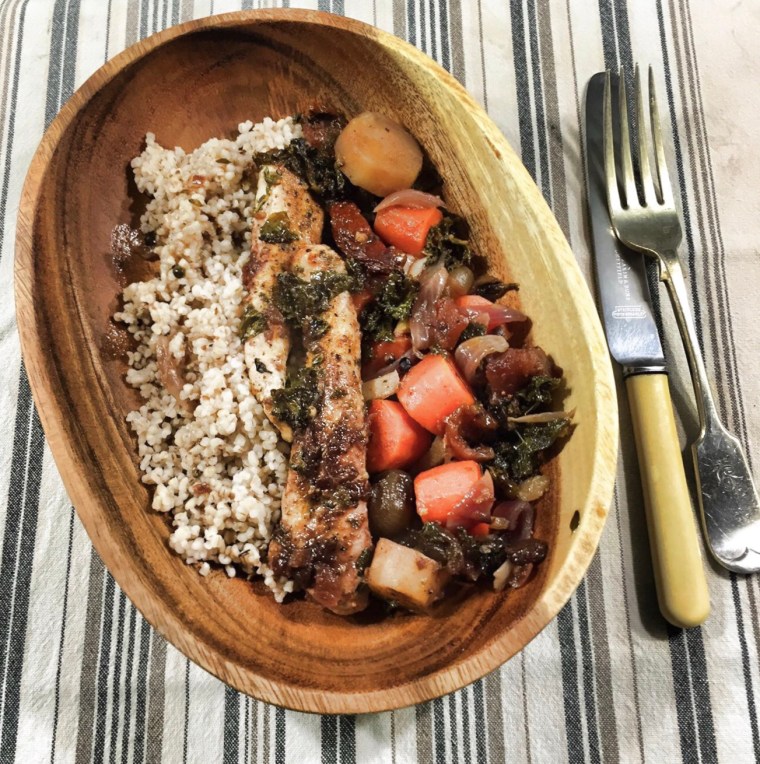
Marinate rabbit in olive oil, sliced garlic, coarse pepper, salt flakes and herbs, for a couple of hours. In the large non-stick frying pan, roast chopped vegetables with a generous splash of olive oil. While the vegetables are sautéing, place the marinated meat on another pan, and fry gently but do not cook throughly. Place them into a heat resistant glass dish (e.g. Pyrex). At this stage add kale, sliced tomatoes and marinated onions on top of the veggies and rabbit. Cover by lid and sweat for another 10 mins or so on low heat, in the meantime add the fig chutney until all soft and moist from the juices and the meat is cooked through.

IMG_0395

As I am a barley lover I found the barley groats as a great compliment for this casserole. Rice seemed a bit too plain. And above all, this is the original meal we’re cooking, right?

IMG_0421

One more thing, this dish goes so well with a glass of grenache red wine!

Dior, Avedon, Fashion.

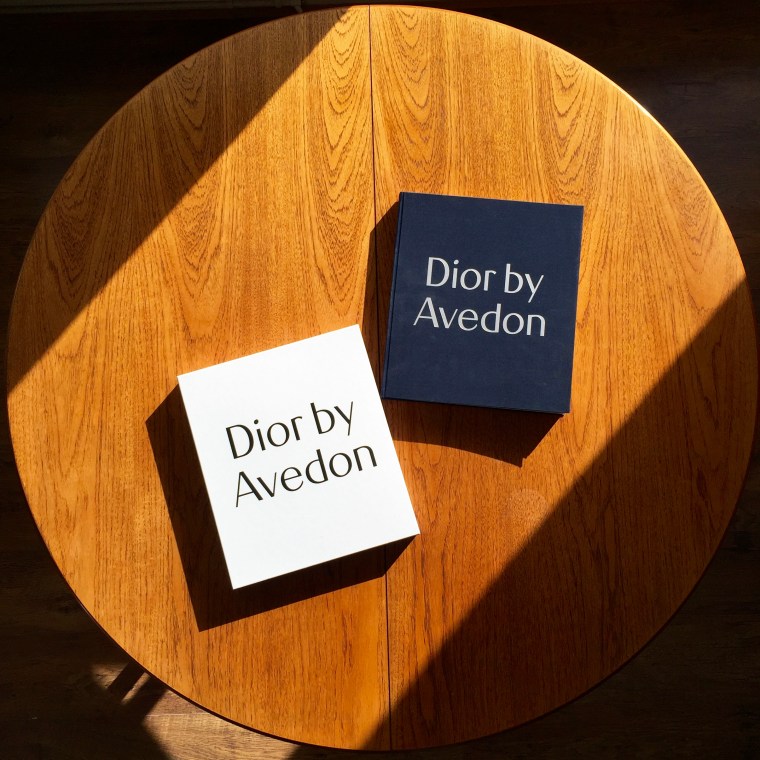
By all means, I am delighted that this book exists. The design, paper quality, and sheer size of this album compliments perfectly what the author, Justine Picardie, has captured in its contents. A real créme de la créme for every fashion aficionado. To be precise, this multi-talented magazine Editor has compiled a rather extraordinary history of fashion. An evolution, chronologically represented by 3 influential designers from the house of Dior, and lensed through decades by the definitive Richard Avedon.

IMG_1043
Picardie first guides us through Dior’s postwar launch of the ‘New Look’ (and what revolution it caused on the streets of Paris). Then she explores Saint Laurent’s couture designs worn by Jacqueline de Ribes and Audrey Hepburn, and finally Marc Bohan’s designs created over 15 years, modelled on Veruschka and Lauren Hutton to name a few. All this accomplished by encyclopedic yet fascinating descriptions of collaboration between the designers and the photographer, whom owed all credits of trust and support to the legendary Editrix of Harper’s Bazaar Carmel Snow. It was Snow who encouraged Avedon to shot the Couture collection for her magazine spreads. The rest is history.

IMG_1014
A new chapter in fashion history. Corolle line by Christian Dior, Paris 1947.

IMG_1017
Dovima wearing gown designed by YSL for Dior. Legendary photo captured by Avedon in 1955 published in Harper’s Bazaar.

Processed with VSCOcam with s2 preset
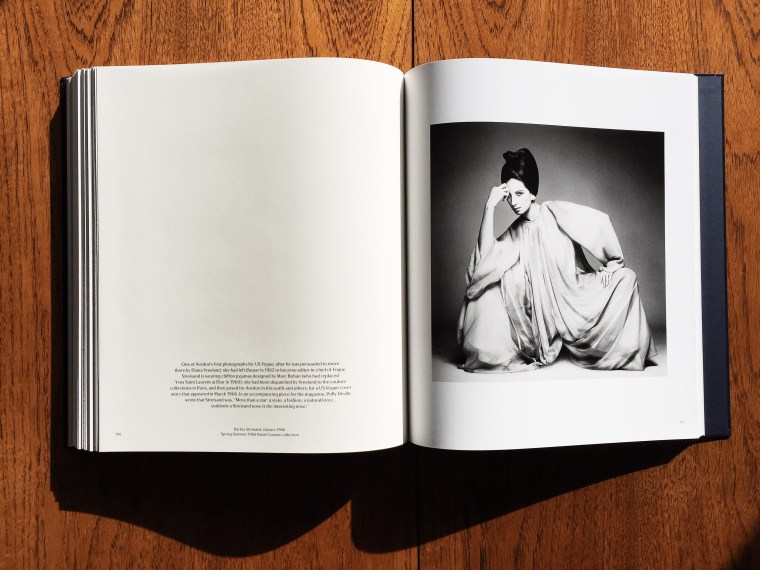
Barbra Streisand gracing pages of Vogue in 1966, in Bohan’s couture dress for Dior.

IMG_1031
Anjelica Huston wearing Dior’s makeup and accessories. Beauty pages of Vogue US, 1973
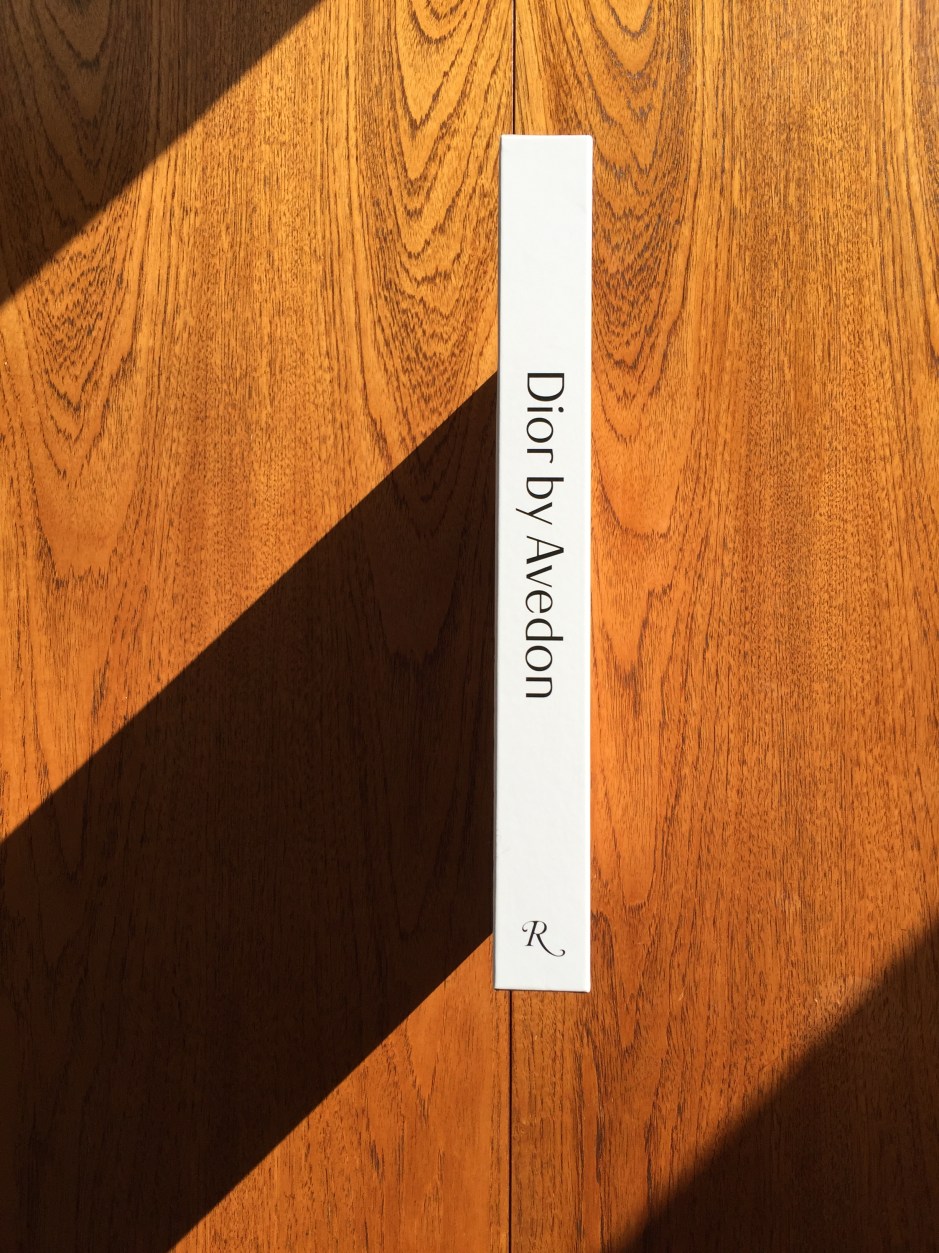
Dior by Avedon published by Rizzoli

Justine Picardie is the author of this album. She is also the Editor of Harper’s Bazaar UK and Town and Country magazine.

Japanese Curry!

Usually, when you think of curry, one conjures up images of India, not necessarily Japan. I had the same connotations until I joined Monocle Café and started working with the Japanese team who introduced me to this creamy and vibrant meal. Although it’s been a long time since I said my farewells to this wonderful Team, I still recreate this meal to my own taste and proportions…and let me tell you – my fine tuning has resulted in a dish more spectacular than I could hope for! So, my first action (or second, as I ate this as soon as it was ready!) was to share with you on my blog. Again, this is easy to prepare food (20-25mins), excellent for dinner or as a supper day after.

Ingredients:
2 medium chicken breast, sliced
a couple of medium carrots
up to 3 shallot onions
2 garlic cloves
a few bay leaves
1/2 of chili pepper
a handful of green peppercorns
3 large spoons of butter
about 300ml of greek yoghurt – depends how creamy you want to make this dish
1 tbsp of madras curry (powder/paste)
1 tbsp of curry roux (or garam masala)
2 tsp of konsome stock

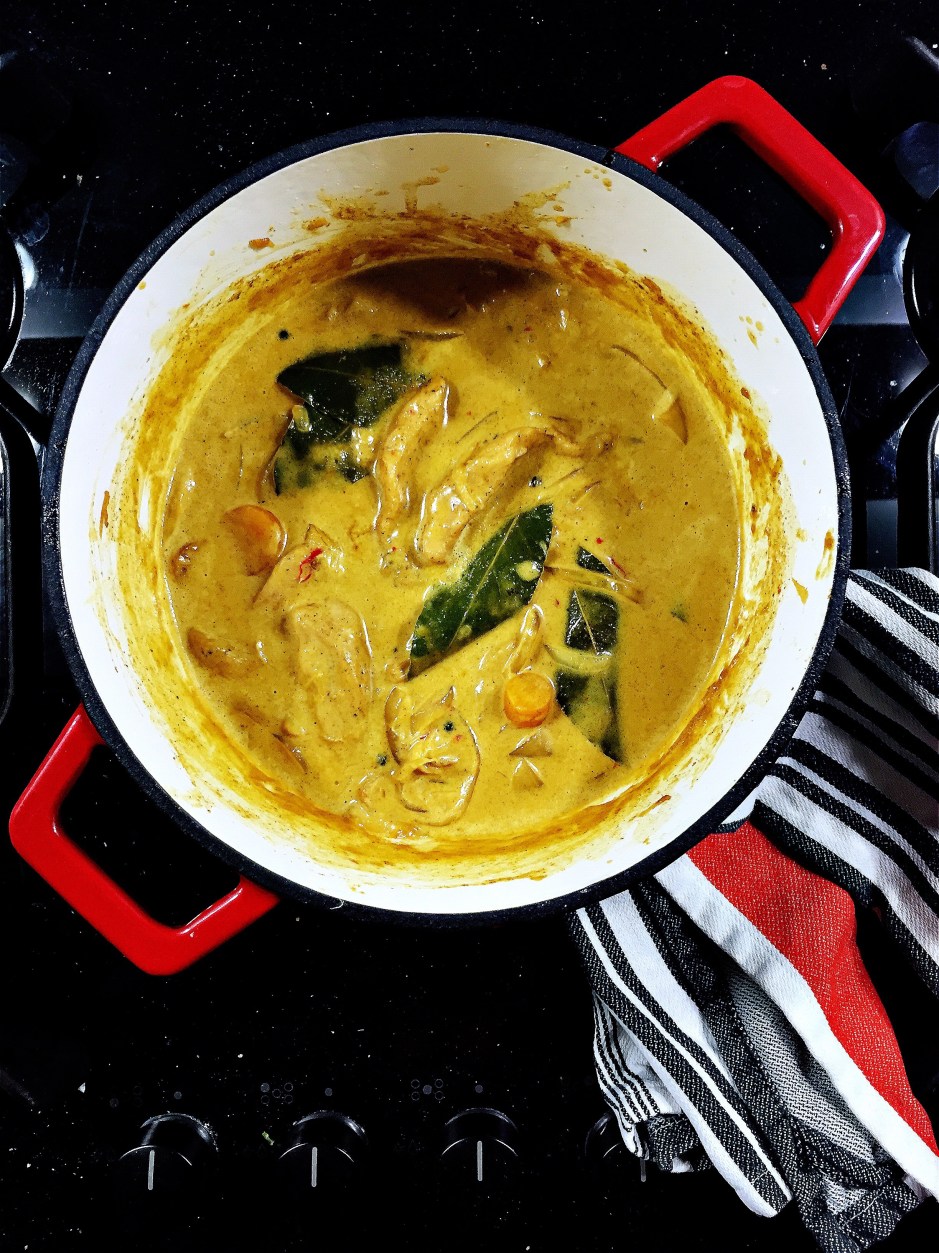
In cast iron pot, melt the butter with bay leaves (I figured out that this is a great solution to extract most of the aroma from the leaves). After a couple of minutes add peppercorns, chili with vegetables and braise together until al dente. Do not overcook them as they’ll soften more with the chicken added a bit later.   If you’re not sure about the order, follow the photos with description, and I believe your cooking will be more enjoyable!

IMG_1421
When vegetables are al dente, add seasoned chicken and braise until meat is tender.
IMG_1424
Prepare curry mix: 200ml boiling water, tbsp of curry powder, tbsp of curry roux and tsp of konsome stock. Mix all together.
IMG_1418
Pour the curry mix into pan and stir for 5 mins. Don’t worry if at this stage if it tastes rather  salty. The yoghurt you’ll add after the curry is mixed with chicken, will balance all the  flavours perfectly!
IMG_1416
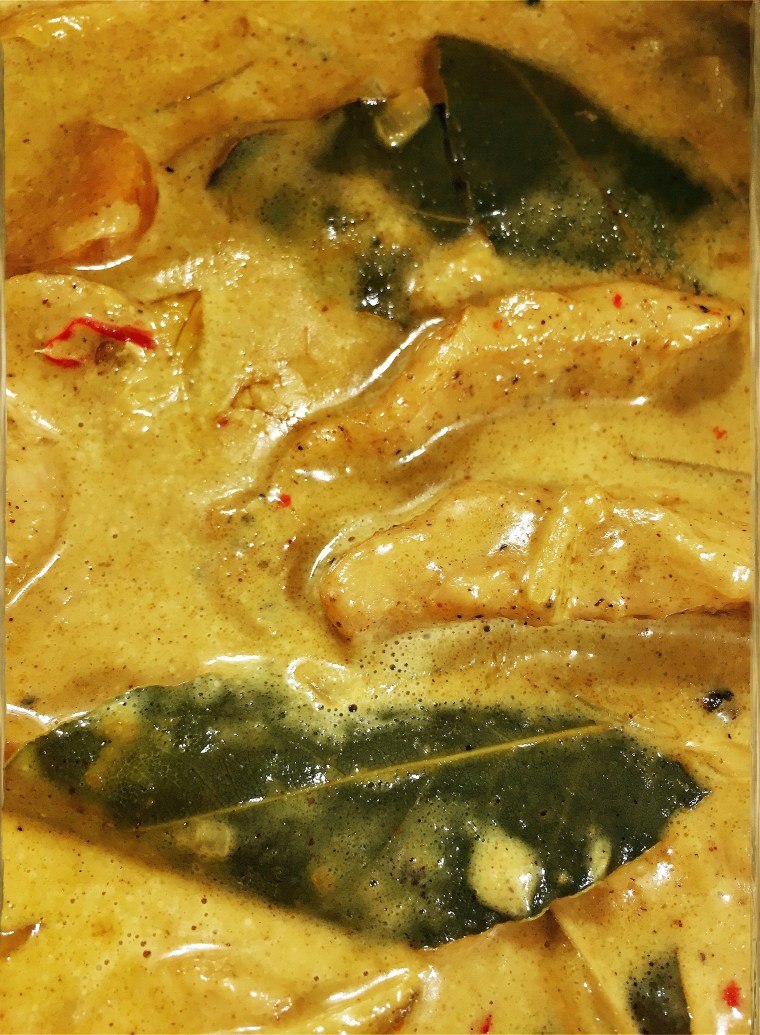
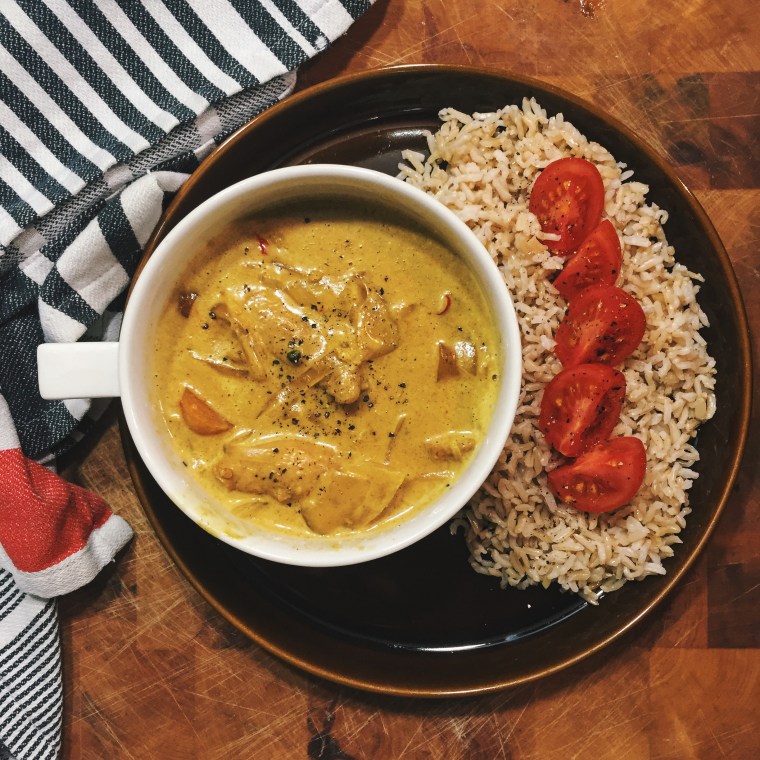
ready to eat. Is it only me who thinks that this image speaks for itself? #mouthwatering
Processed with VSCOcam with f1 preset
brown rice complements the perfectly rich flavour of this delicious meal. #yum

Bon appétit aka Meshiagare!

Braised pollock

I am a big fan of fish, pollock in particular. Mostly because this type of fish was often served by my Mum when my hungry brother, sister and I got home from school. She always kept extra pieces frozen for emergencies, but most of all she knew that thanks to its white, chunky yet delicate flesh, Pollock was a lighter and healthier alternative to meat. To cut a long story short; Mamunia (our affectionate petname for our Mum) is a master in one particular fish-based meal; Greek style fish. Although the origins of this meal has nothing to do with Greece, its named that way in my home country and usually served for celebratory occasions. Not in our house. It was the ideal meal when she had limited time and wanted to make something easy for the whole family. My version is slightly updated with ingredients such as capers and lemon zest. As a result you’ll get a traditional meal with modern twist. I served it to Mamunia once with mixed feelings whether she’ll like it…or not. And let me tell you, there’s no bigger pleasure when your Mum is asking for an extra portion of what you’ve cooked!

Ingredients:
3 peeled carrots
1 medium peeled parsnip,
1 medium leek
1 large onion (Spanish is best)
1 unwaxed lemon, few bay leaves
2 tbsp of marinated capers, 4 allspice corns
bunch of lemon thyme, salt, pepper
1 bottle (700ml) of tomato passata

IMG_0776
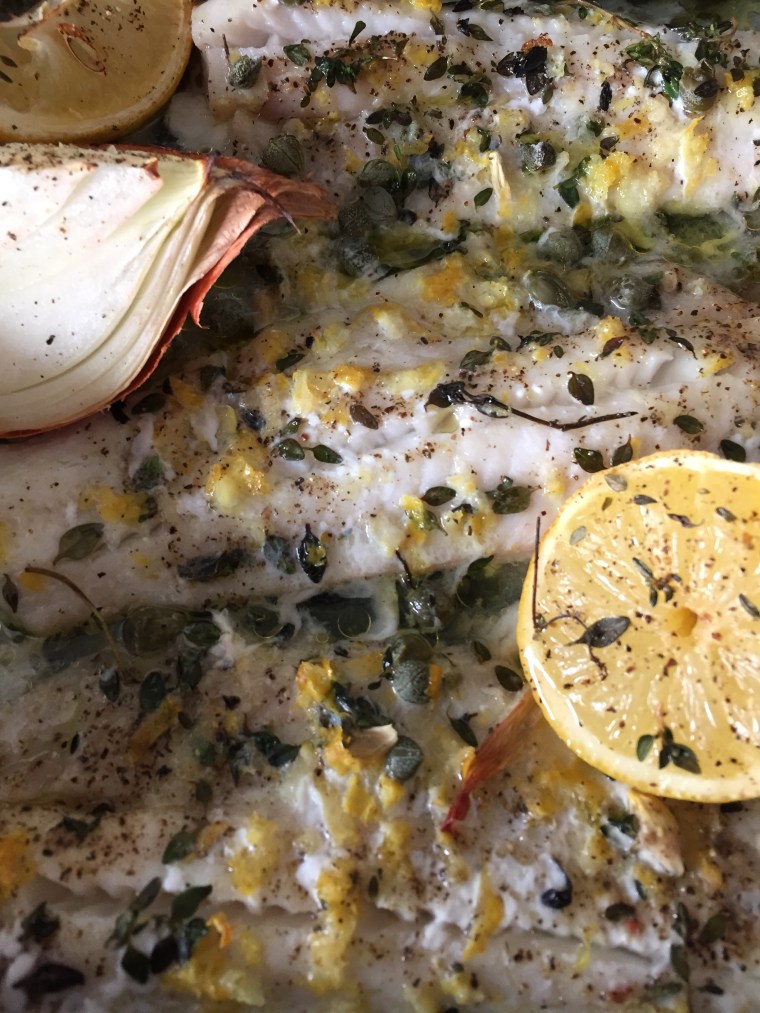
Pollock fillet seasoned with capers, thyme, lemon zest and pepper.

Season the fillets and place them on a baking tray. Add capers, thyme and lemon zest.
Bake in the oven  for 10-15 mins at 180C

IMG_0763

In the meantime chop onion and leek and stir in a lightly oiled heavy bottomed pan with allspice and bay leaves over a low heat. Then add grated carrot, grated parsnip and sweat until veggies are tender. When it’s time, pour the passata into vegetables and cook thoroughly. Place everything in an oven proof dish with baked fish and leave in the warm oven for another 10 mins.

Processed with VSCOcam with s3 preset
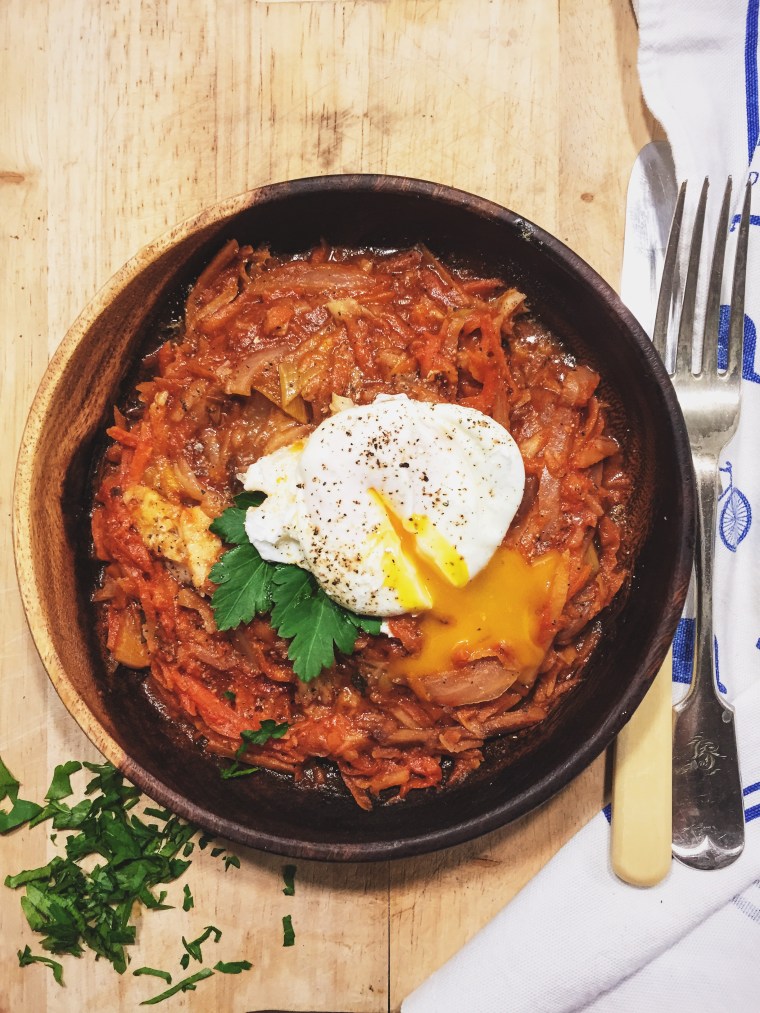
Version with poached egg and chopped parsley-my favourite!


Cavolo Nero!

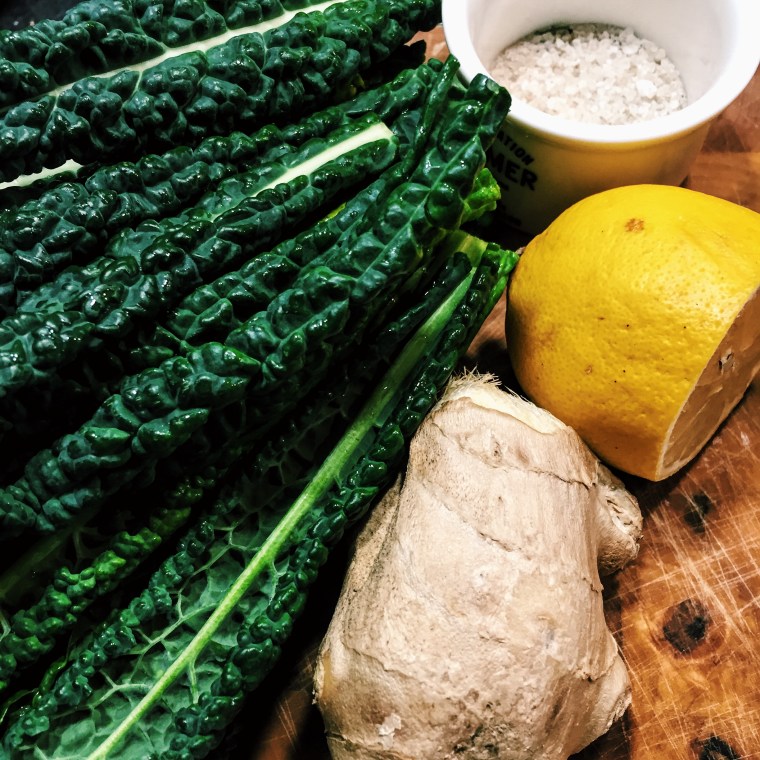
Not cabbage nor lettuce. Actually Cavolo Nero is a cousin of kale.
It has an interesting, slightly earthy and peppery flavour and is a great alternative if you are tired of the greens that regularly appear on your plate.
Until recently, I didn’t have a clue what Cavolo Nero was and what I could make with it.
I bought it from my local grocer attracted by its beautiful colour and interesting structure (AKA Dinosaur skin!) He said I’d like it and he wasn’t wrong. These unusual leaves were in my fridge for two days before I decided to cook it, and it was still fresh and firm.
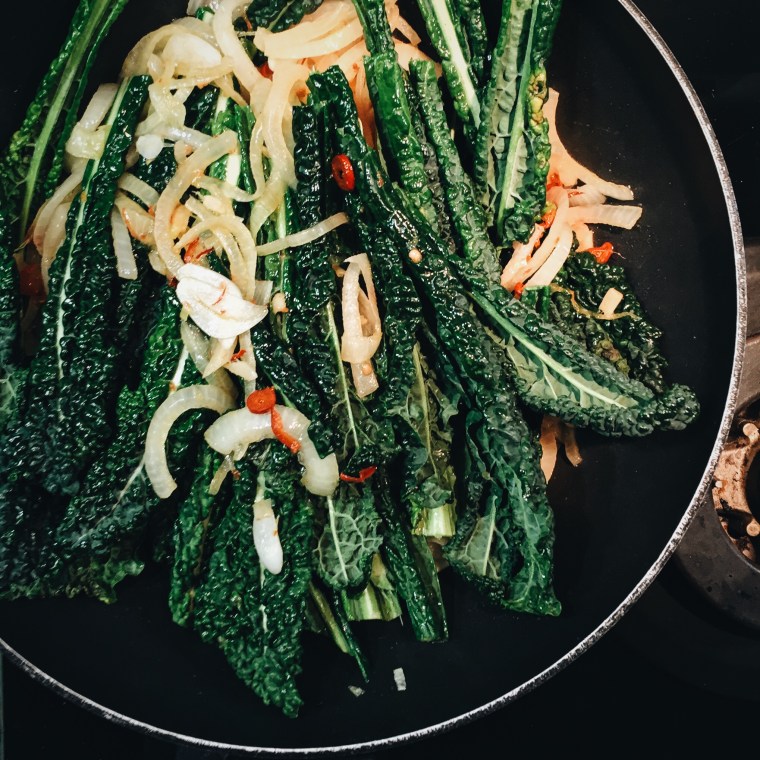
I created this new meal out of what I had left in the fridge and cupboard, a bit of a stir fry idea with an Italian twist. And the result was rather flavoursome.

It consists of:

2 bunches of cavolo nero
2 tbsp of grated ginger
1/2 of unwaxed lemon
1 large spanish onion
4 garlic cloves
1 chilli pepper
a pinch of crunchy salt and coarse pepper

Processed with VSCOcam with c1 preset

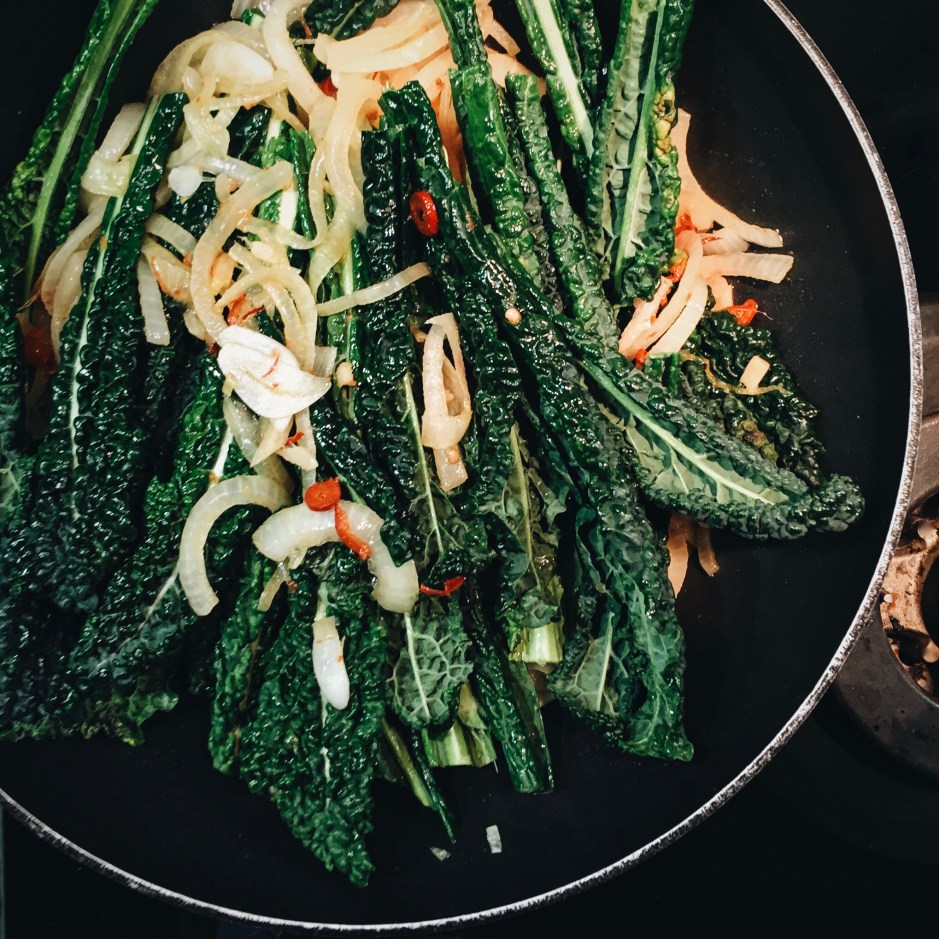
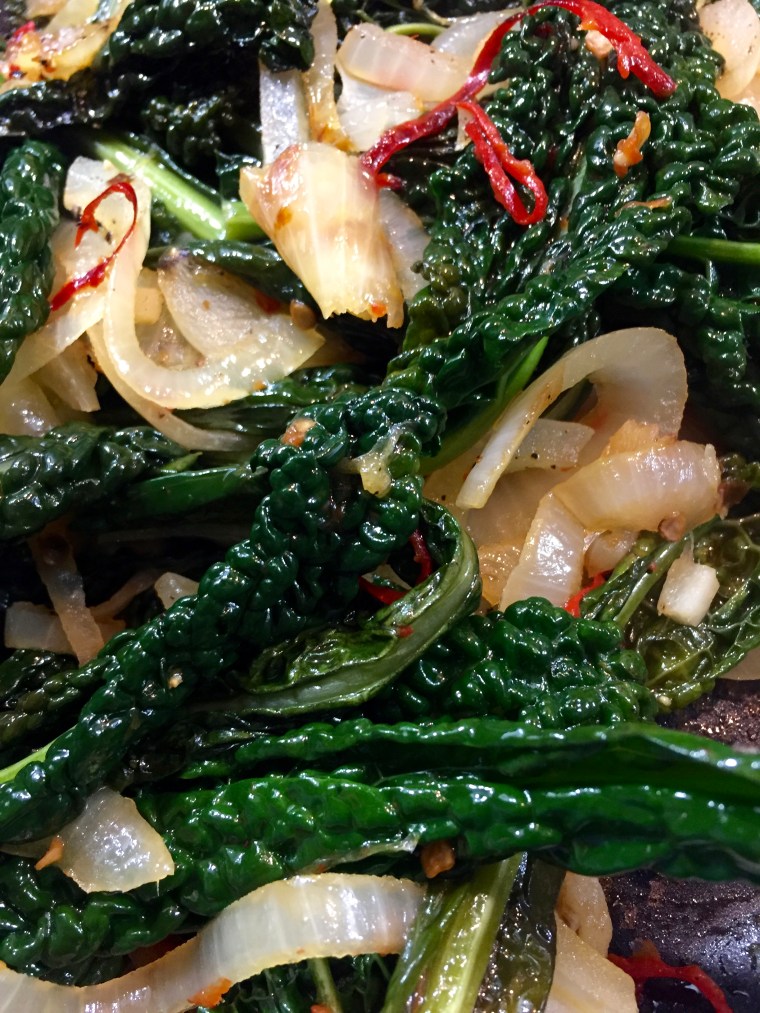
Heat up a glug of olive oil in a heavy bottomed pan, add chopped onion and stir until soft. Add sliced garlic, chilli, rosemary (optional) and grated ginger. Cover with lid and sweat for a few minutes. Add the cavolo nero, stir with vegetables on very low heat until wilted. Season with crunchy salt and pepper. Mix with freshy cooked linguine pasta and serve immediately sprinkled with lemon juice.
I didn’t have any parmigiano in the fridge last night but I think it would be a perfect ingredient to grate on top of this meal before serving.

Processed with VSCOcam with a6 presetIMG_1108IMG_1128

#yum!

Always in great company

It happened at a meeting with an acquaintance.  We meet at my favourite bookstore, Assouline, London. After a quick tour of the interiors of the house, the spine of a book named Lee Radziwill, drew my attention immediately from a large bookshelf.

Processed with VSCOcam with s2 preset
Lee, the stylish mother with her kids.

I grabbed the hardback with no hesitation and purchased that evening. One of the reasons it hightened my curiosity was that she was married to Stanislaw Radziwill, who was a cousin of my great-grandmother. As a bonus it’s a tasteful journey through decades of great style, and an interesting historical account of a well-connected socialite during the JFK era. Flicking through the pages, you’ll discover the chronicle of Lee’s life, captured in photos from her private archives. Hanging out with her sister Jackie O., and surrounded by equally influential personalities such as Mick Jagger, Truman Capote, Rudolph Nureyev and Aristotle Onassis to name a few, helps propel Lee’s story to a truly inspirational read.

IMG_9640
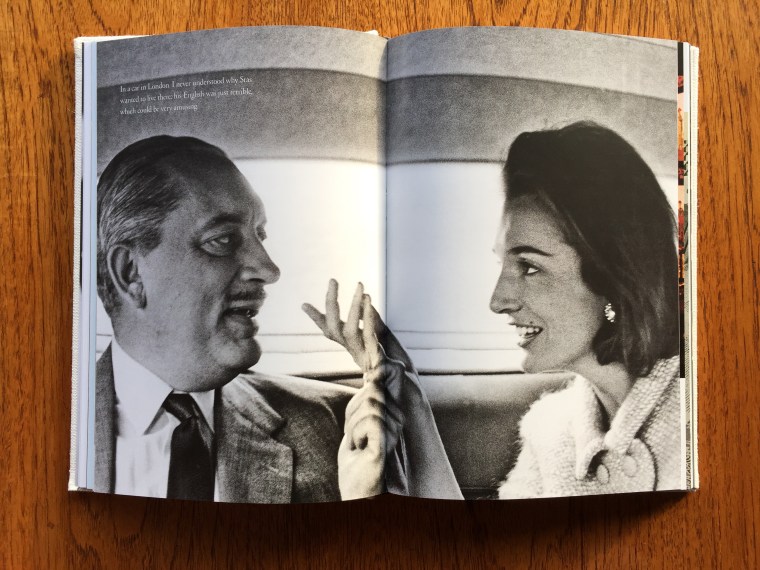
With Stas Radziwill. He was her first huband. She was his 3rd wife.

IMG_0222
Young Lee hanging out with Mick Jagger in Montauk.

Processed with VSCOcam with s2 preset
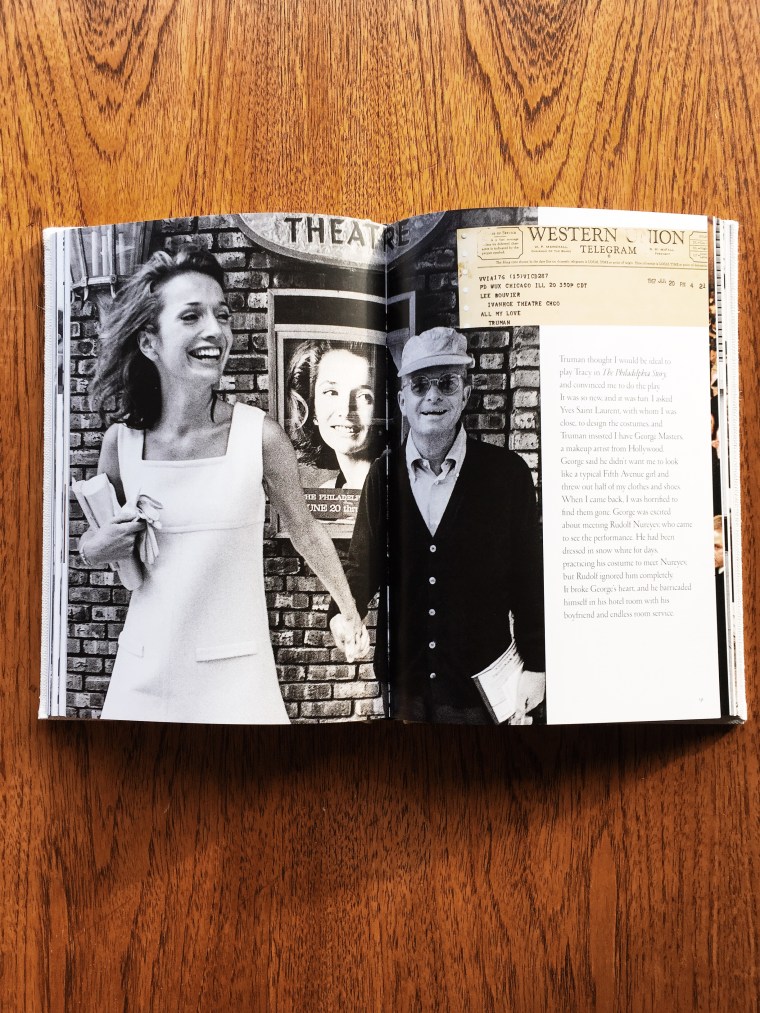
Truman Capote gave her a role in ‘The Philadelphia Story’ play. Yves Saint Laurent, Lee’s friend, had designed costumes for this play.

IMG_9647
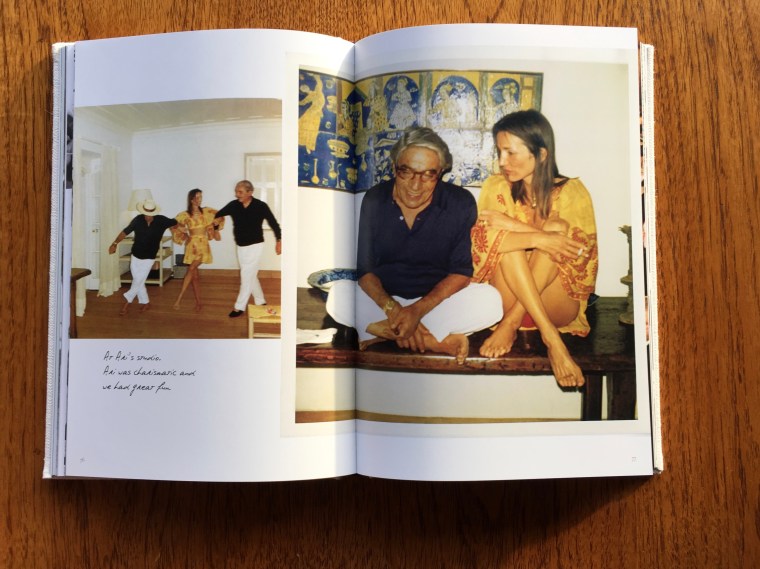
Aristotle Onassis. Lee’s brother in law. A very good companion.


Spontaneous Sea Bream

This dish is another example of a quick but lip-smacking idea for an afterwork dinner. It’s easy to pepare. Each of the ingredients takes the same amount of time to cook, so there’s no worry that something will get cold whilst preparing the others.

The way I prepare it:
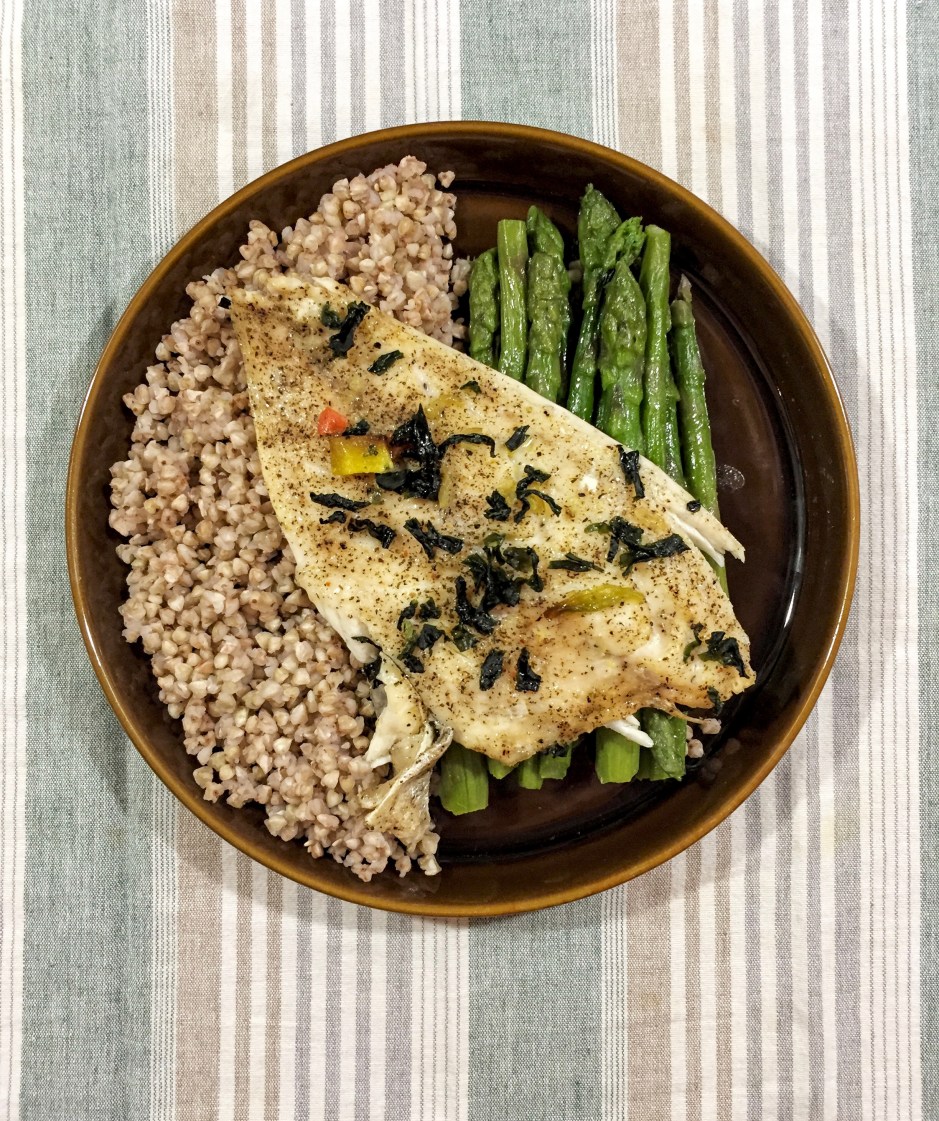
season filet of fish (sea bream in this case) with white pepper and miso soup topping (they soften into the flesh adding an amazing flavour)
Simmer white buckwheat in medium size pot with salted water for 15 minutes, whilst sauting asparagus slowly with butter in a non sticky pan.

Processed with VSCOcam with s2 preset
sauteéd asparagus
IMG_9033
dinner is ready. #yum
 cooked buckwheat
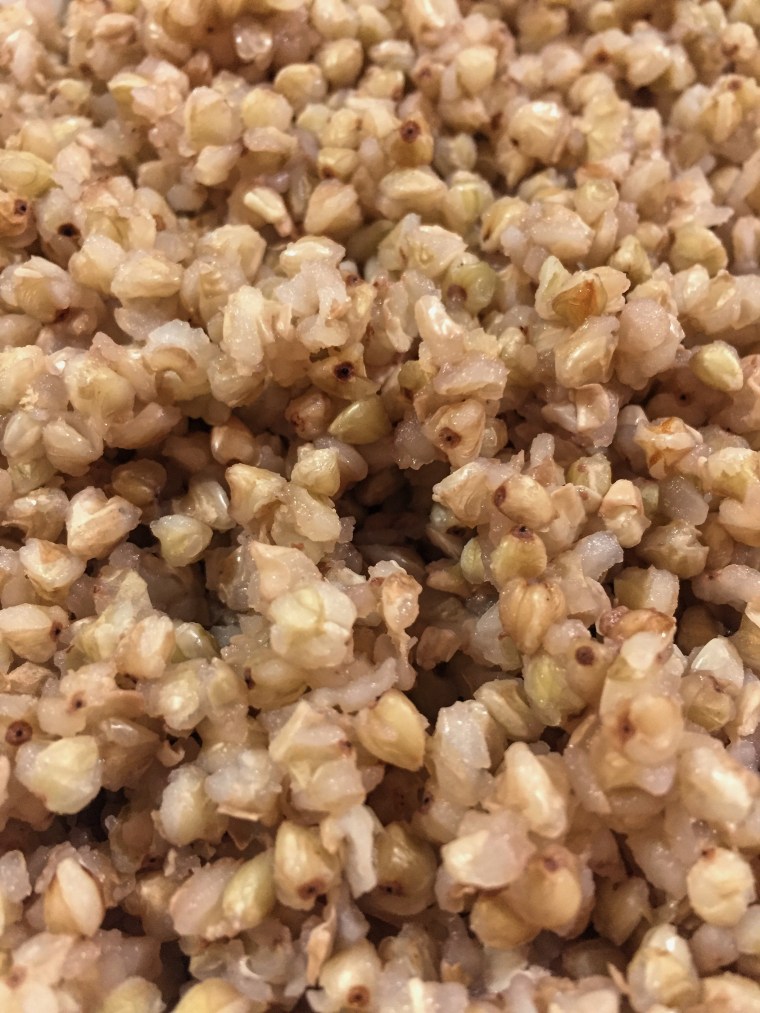
cooked and seasoned buckwheat ready to serve

Few suggestions:
– Bake the fish wrapped in aluminium foil at temperature of 180C.
It will keep the fish moist and prevent from drying.
Put the wrapped fish in the oven when you begin to simmer the buckwheat for perfect timing.
– Sauteé asparagus on the medium heat with good butter, they soften beautifully and prevent butter from burning out.
– Simmer the buckwheat in salted water rather than seasoning afterwards and leave to rest for a few minutes before serving.


Red is the colour

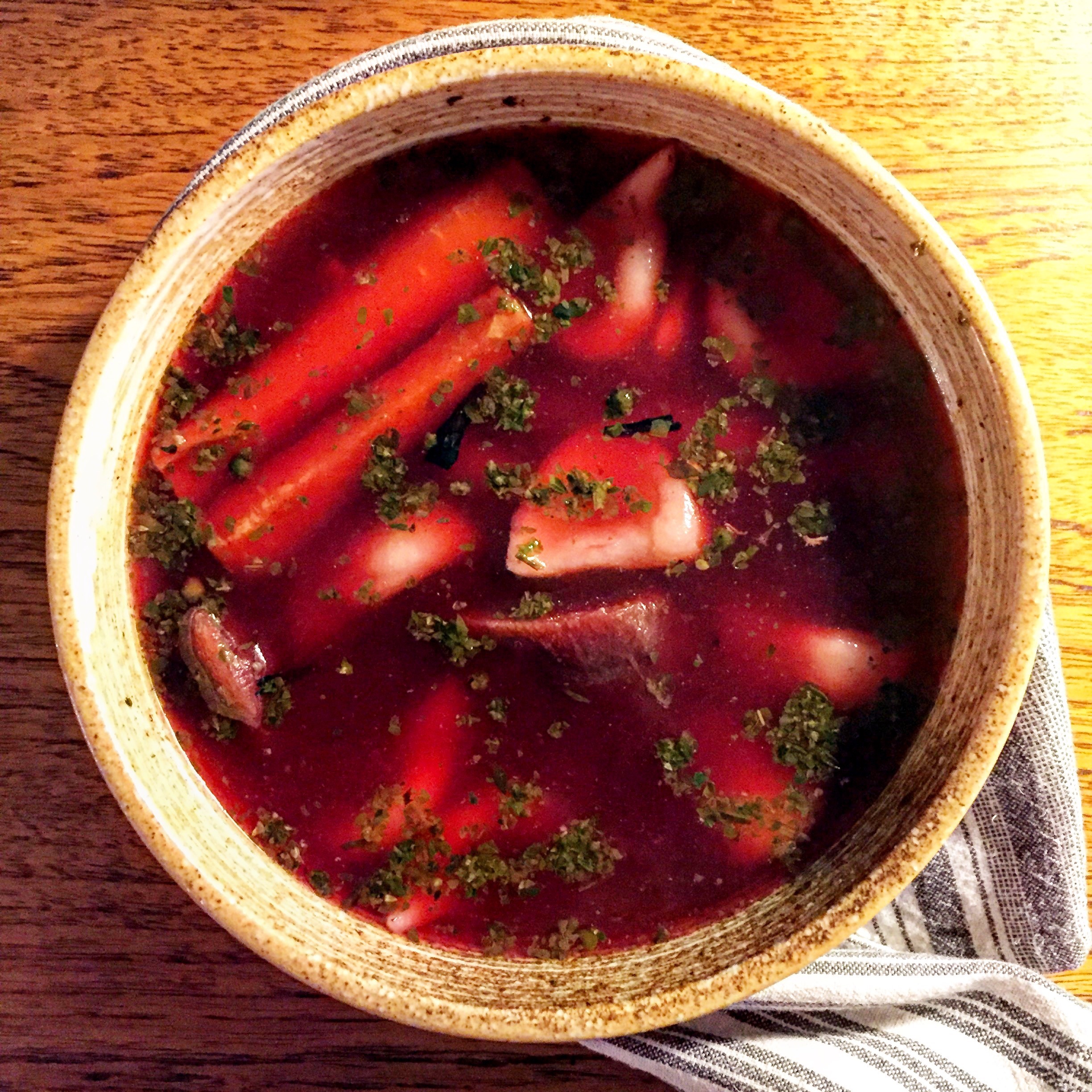
Red borsch. Traditional, tasty  and warming beetroot soup.
Mostly served during the Festive period; however in my house, Mum was making this wonderful soup during cold spells. As she had the tendency to cook far too much broth for other dishes on Sunday, the borsch was usually a post weekend lunch prepared with leftover boullion. Well, that’s one of the only reasons why I loved Mondays. They were just so flavoursome!

To cook red borsch you need:
for 2 litres of broth:
3 chicken thighs
2 carrots cut lengthwise
1 parsnip cut lengthwise
a quarter of celeriac
1 shallot onion, halved
half of the garlic bulb
bouquet garni
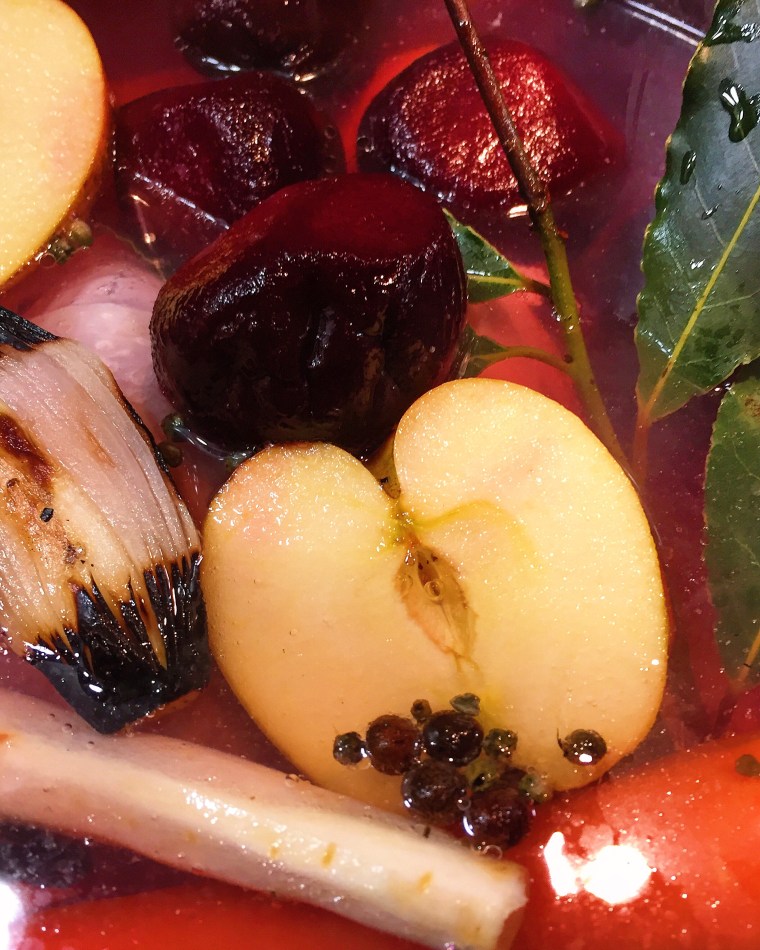
3 medium beetroots ( thickly sliced )
1 small apple cut into 2 halves
3 bay leaves, 4 whole spice berries, few cloves

Note: if you’re a vegetarian, instead of chicken add a portion of Herb Infusion Pot by Knorr. A tasteful alternative.

IMG_9482
When chicken is ready after about 20mins, remove it and the bouquet garni then add;
a generous handful of marjoram, a pinch of nutmeg to your own taste
a bunch of fresh lemon thyme img_9480
Simmer on the lower heat until all vegetables are al dente (there’s nothing worse than overcooked veggies, right?) and the mouth-watering smell of spices is filling the kitchen.
Serve with mini dumplings, aka mini ears.

  Voilà! x